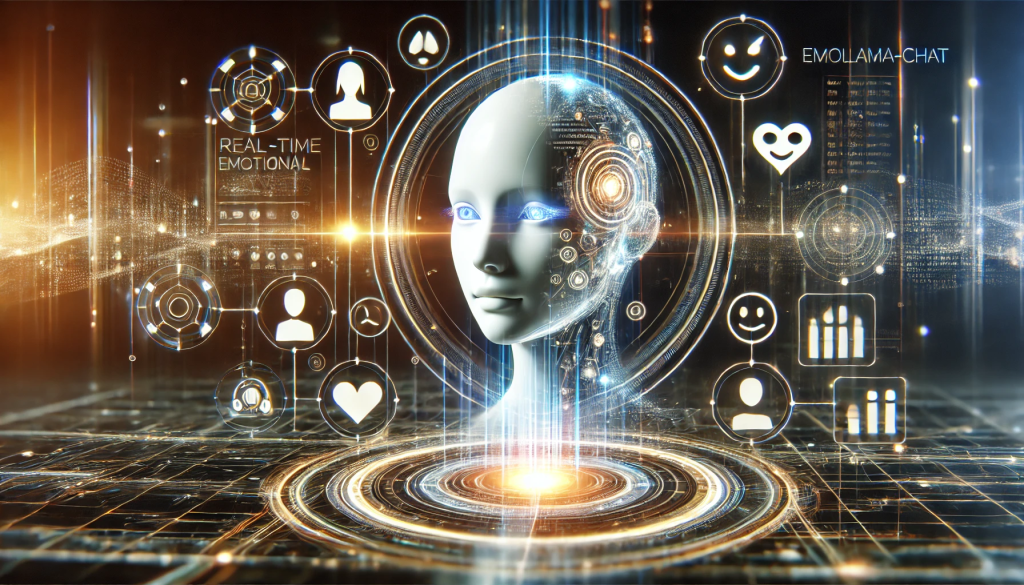
In today’s digital transformation landscape, emerging technologies are constantly pushing us to rethink how we interact with the digital world. Among these, conversational AI has seen significant growth.
In this article, we’ll focus on EmoLLaMA-chat, an advanced AI model designed to understand and respond to human emotions during conversations. However, it’s important to note that EmoLLaMA-chat is just one part of a larger project called EmoLLMs, which includes a variety of large language models (LLMs) optimized for emotional analysis.
EmoLLaMA-chat is only an example of how artificial intelligence can interact with human emotions. The insights we’ll discuss apply to all models in the EmoLLMs family and to other LLMs designed for emotional analysis.
EmoLLMs: A broader project for emotional analysis
The EmoLLMs project is a comprehensive platform that includes several models such as EmoLLaMA-7b, EmoBART-large, and EmoOPT-13b.
Each of these models is optimized to handle different emotional tasks, from classifying emotions to evaluating their intensity.
These models have been developed to recognize, interpret, and respond to emotions expressed in text, offering automated emotional support in real-time text conversations.
While we will use EmoLLaMA-chat as an example in this article, the considerations about opportunities, risks, and ethical use are broadly applicable to all models in the emotional LLM category, which are increasingly being adopted in various industries.
What makes EmoLLaMA-chat and other EmoLLMs different from other LLMs?
The models in the EmoLLMs family, including EmoLLaMA-chat, stand out because they are specifically designed to detect and interpret human emotions in text-based interactions. This is particularly useful in industries where emotions play a key role, such as customer service, mental health support, and digital content moderation.
Thanks to their ability to analyze language with emotional depth, these models can recognize emotions like joy, sadness, anger, and adjust their responses to enhance the user experience. For example, a virtual assistant can adapt its tone and responses based on the customer’s emotional state, offering a more empathetic and human-like interaction.
Opportunities and risks shared by all emotional LLMs
The adoption of models like those in EmoLLMs opens up new opportunities for digital transformation in various sectors but also introduces risks that should not be overlooked.
Opportunities
- Empathy in customer service: Models like EmoLLaMA-chat and other EmoLLMs can improve the user experience by recognizing and responding to emotions in an empathetic way, reducing customer frustration and increasing satisfaction.
- Mental health support: Emotional AI can be used to monitor and detect signs of anxiety or depression, providing a first level of support and guiding individuals towards professional help when necessary.
- Content moderation and digital interaction: EmoLLMs can help identify harmful or toxic content on social media, improving the quality of online interactions.
Risks
However, as with all powerful technologies, emotional LLMs also bring significant risks. One of the main dangers is the possibility of emotional manipulation. Unscrupulous companies could exploit emotional vulnerabilities detected by these models to influence purchasing decisions or behaviors.
Moreover, models like EmoLLaMA-chat are subject to bias in the datasets they are trained on. These biases, if not corrected, can lead to misinterpretations of emotions and inappropriate responses, which could have serious consequences, especially in sensitive contexts like mental health or customer service.
Protecting users in the adoption of EmoLLMs
To fully harness the opportunities provided by EmoLLMs, it’s crucial to adopt ethical and security measures to protect users. These principles should apply not just to EmoLLaMA-chat, but to any model that has access to emotional data or interacts with users on an emotional level.
- Privacy of emotional data: Emotional data is highly sensitive and should be treated with the same level of protection as personal information, ensuring compliance with regulations like GDPR.
- Regular bias audits: LLMs should be regularly audited to identify and correct any biases that may affect their interpretation of emotions.
- Human oversight: In critical applications like mental health, emotional AI models must be supported by human professionals, ensuring that critical decisions are not left solely to AI.
EmoLLMs and the future of emotional intelligence
Emotional LLMs represent an area of innovation that offers great potential, but requires careful attention and responsibility. Projects like EmoLLMs show us how artificial intelligence can improve the quality of digital interactions, making experiences more human, empathetic, and personalized. However, the adoption of these technologies must be guided by solid ethical principles, with a clear understanding of the risks and implications for users.
Integrating models like EmoLLaMA-chat into business processes can open new opportunities to enhance the user experience, increase customer satisfaction, and strengthen support services. At the same time, companies need to be aware of the need to protect users’ privacy and emotional security, building trust that goes beyond simple technological efficiency.
Conclusion
In a time when artificial intelligence is increasingly present in our lives, emotional LLMs like those in the EmoLLMs family represent a new frontier of technological progress. As senior consultants, our role is to guide companies towards a conscious and responsible use of these technologies, recognizing their enormous potential but always keeping user protection and well-being at the center.
Innovation must always be driven by ethics: only in this way can we fully leverage the potential of artificial intelligence to create a more human and respectful digital future.
 TOPFramework.Org
Lascia un commento